How to Calculate Bearing Pressure and Ground Pressure
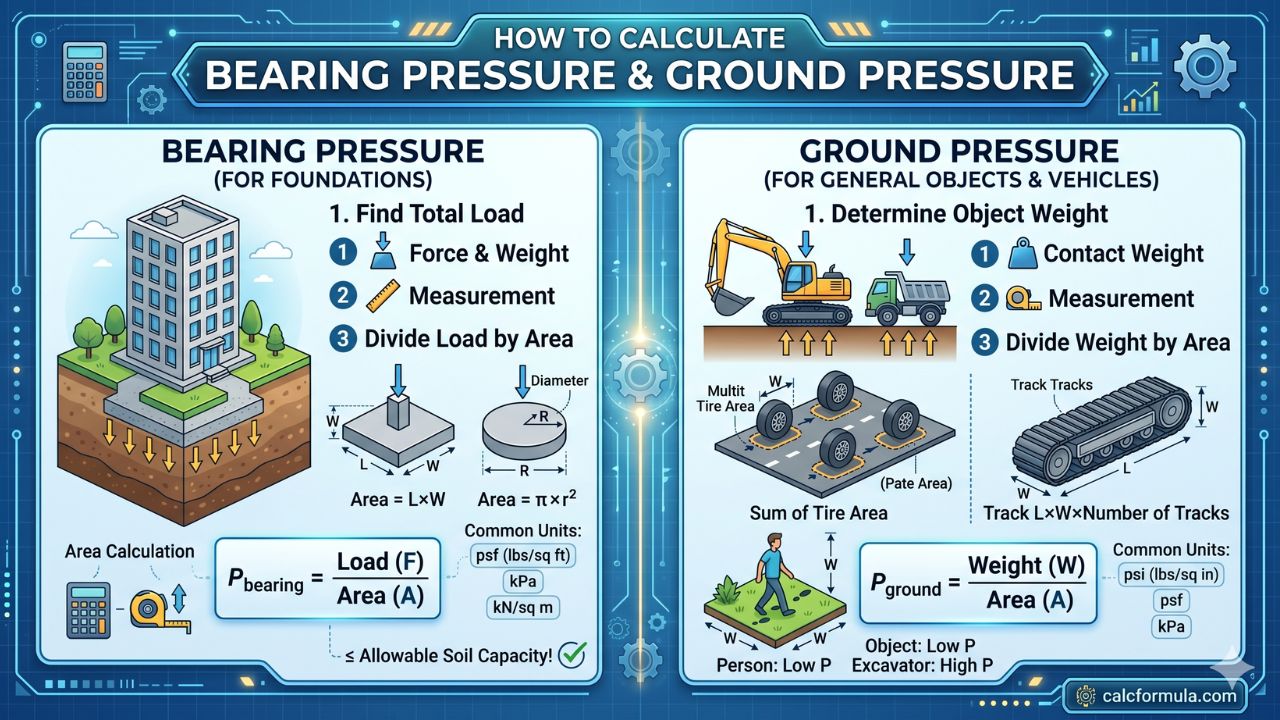
Calculate Bearing Pressure and Ground Pressure

Bearing pressure and ground pressure describe how a load spreads across a contact area — whether that load comes from a footing sitting on soil, a crane outrigger pad resting on fill, a retaining wall base, or heavy equipment moving across a site. Both values are expressed as force per unit area (typically pounds per … Read more
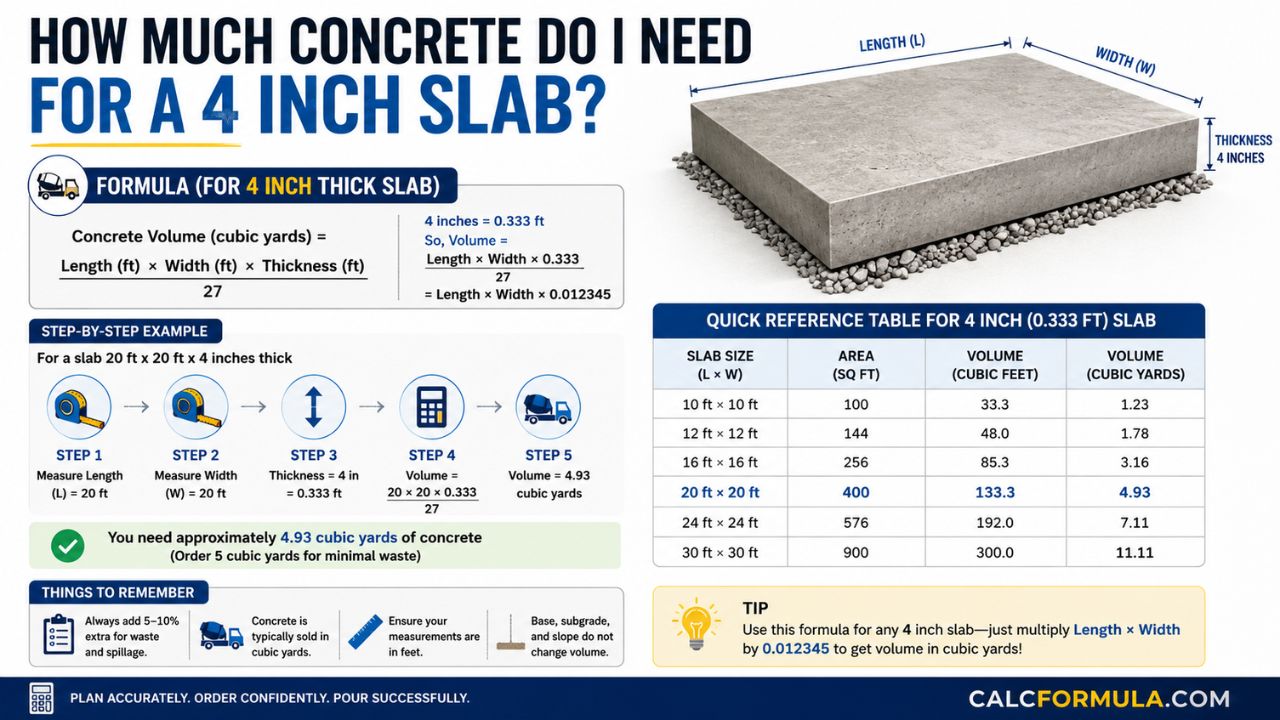
How Much Concrete Do I Need for a 4 Inch Slab?

next for How Much Concrete Do I Need for a 4 Inch Slab?

⚡ Quick Answer To find how much concrete you need for a 4 inch slab, multiply the length × width to get square footage, then multiply by 0.333 ft (4 inches converted to feet) to get cubic feet. Divide by 27 to convert to cubic yards. Add 5–10% for waste. $$\text{Cubic Yards} = \frac{\text{Length (ft)} … Read more

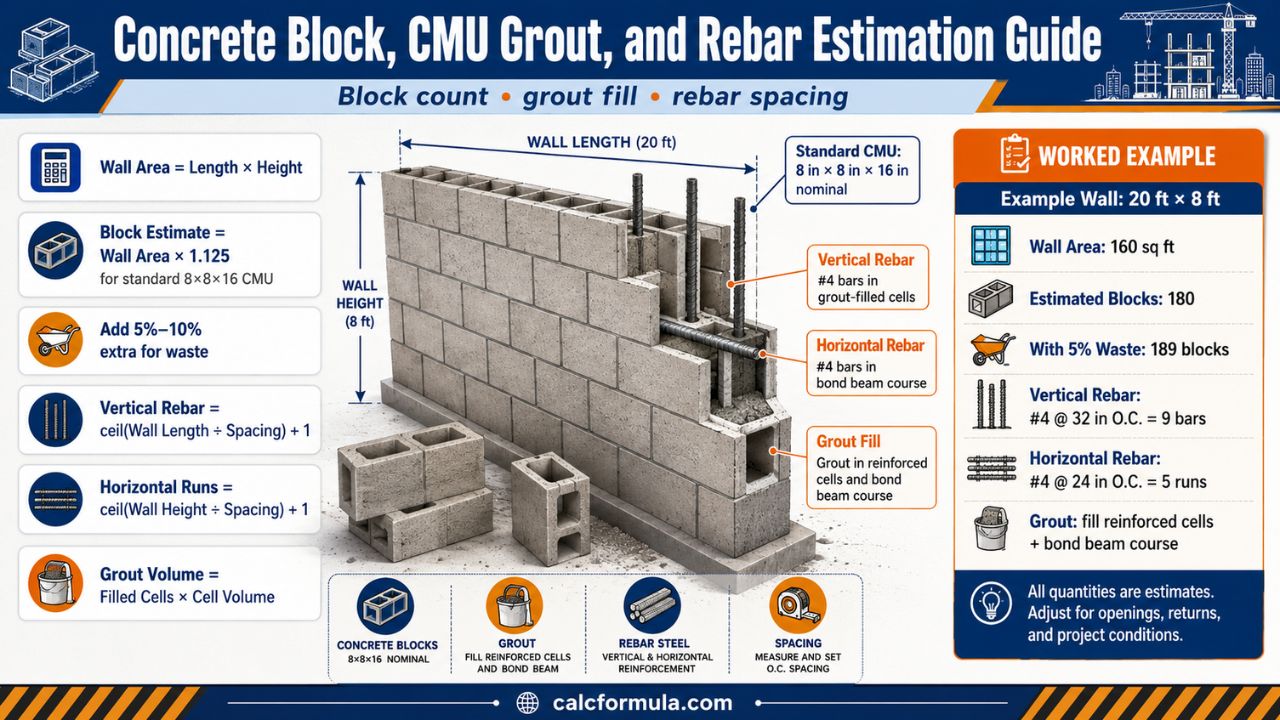
Concrete Block, CMU Grout, and Rebar Estimation Guide

Concrete Block, CMU Grout, and Rebar Estimation

Estimating a concrete masonry unit (CMU) wall requires calculating three interdependent material quantities: the number of blocks, the volume of grout needed to fill designated cells, and the length of vertical and horizontal rebar running through those cells. Each quantity depends on wall dimensions — length, height, and block size — as well as design … Read more

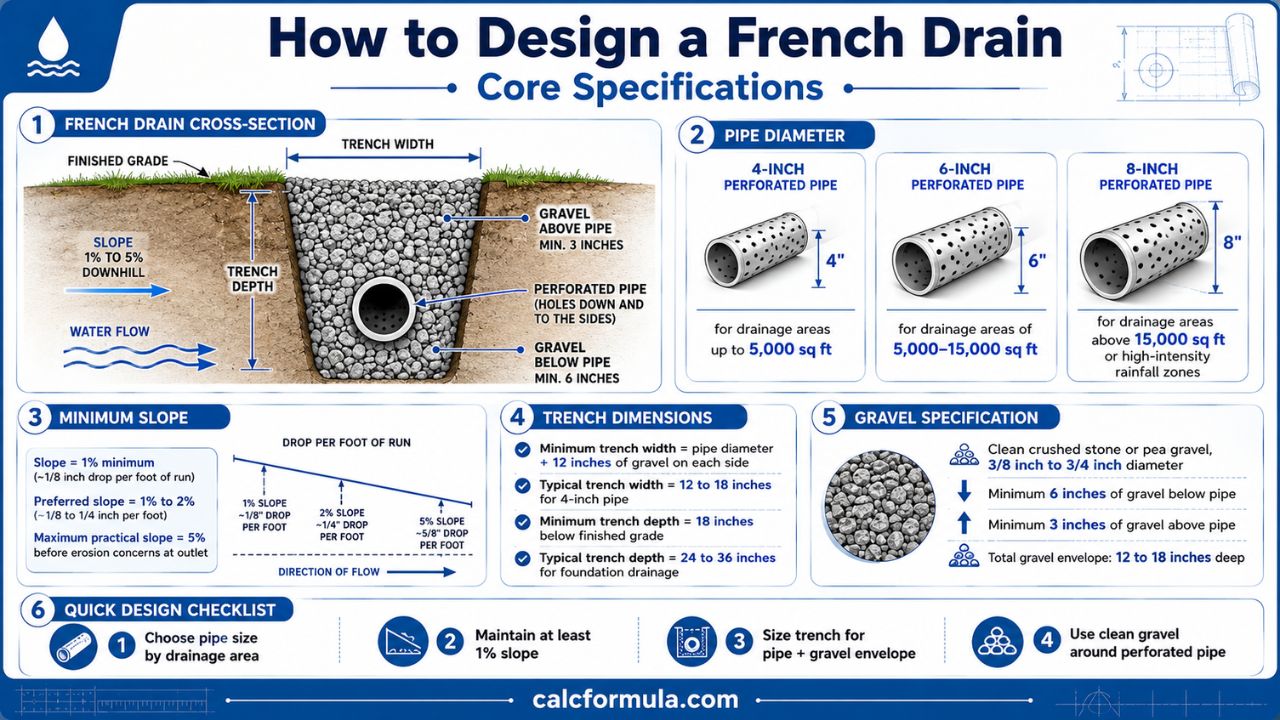
How to Design a French Drain: Pipe Size, Gravel, and Slope

How to Design a French Drain

Waterlogged yards, wet basements, soggy foundation edges, and standing water after every rain event — all of these are symptoms of the same underlying problem: surface water and subsurface groundwater with nowhere to go. A properly designed French drain intercepts that water before it reaches your foundation, collects it through a perforated pipe bedded in … Read more